Mold Inspection After a Roof Leak: What Fresno Homeowners Should Check
Roof leak repaired but the ceiling still smells musty? Learn when a mold inspection helps Fresno homeowners check damp materials before repainting.
The roof has been repaired, the bucket is gone, and the ceiling stain has stopped spreading. Before you repaint, there is one more question to answer: did the material inside the ceiling dry too?
A mold inspection after a roof leak can help assess damp or damaged areas that are not obvious from the room below. It is especially worth discussing when a musty smell remains, the same stain returns, or you do not know how long the leak was there. An old water mark alone does not prove mold is growing, and a fresh coat of paint cannot tell you whether the cavity is dry.
Confirm the Source of the Leak
Have the source of water entry assessed and repaired by the appropriate contractor. A mold inspection does not replace a roof inspection. Tell each professional what the other has found so the work addresses both the water entry and the materials it affected.
Keep the repair date, photos of the original damage, and any notes about previous leaks. A ceiling that became wet during one recent storm presents a different history from an area that has leaked on and off for months. That history helps an inspector decide where to look.
What to Notice Before You Cover the Ceiling
From a safe place in the room, note a stain that changes after rain, peeling paint, damp trim, a persistent earthy smell, or visible growth around the damaged area. Check whether the room above or a nearby plumbing fixture could also be contributing water. Do not assume every ceiling mark came through the roof.
Avoid climbing into an unfamiliar attic or opening a wall to investigate on your own. Sagging ceilings, wet electrical fixtures, and unstable materials call for professional attention. Photograph what you can see safely and describe when it appeared.
What a Mold Inspection Can Check
The assessment should connect the visible damage with the likely path of moisture. Ask which areas are included: the ceiling below the leak, adjoining walls, insulation or framing where accessible, and any nearby areas that may have become wet.
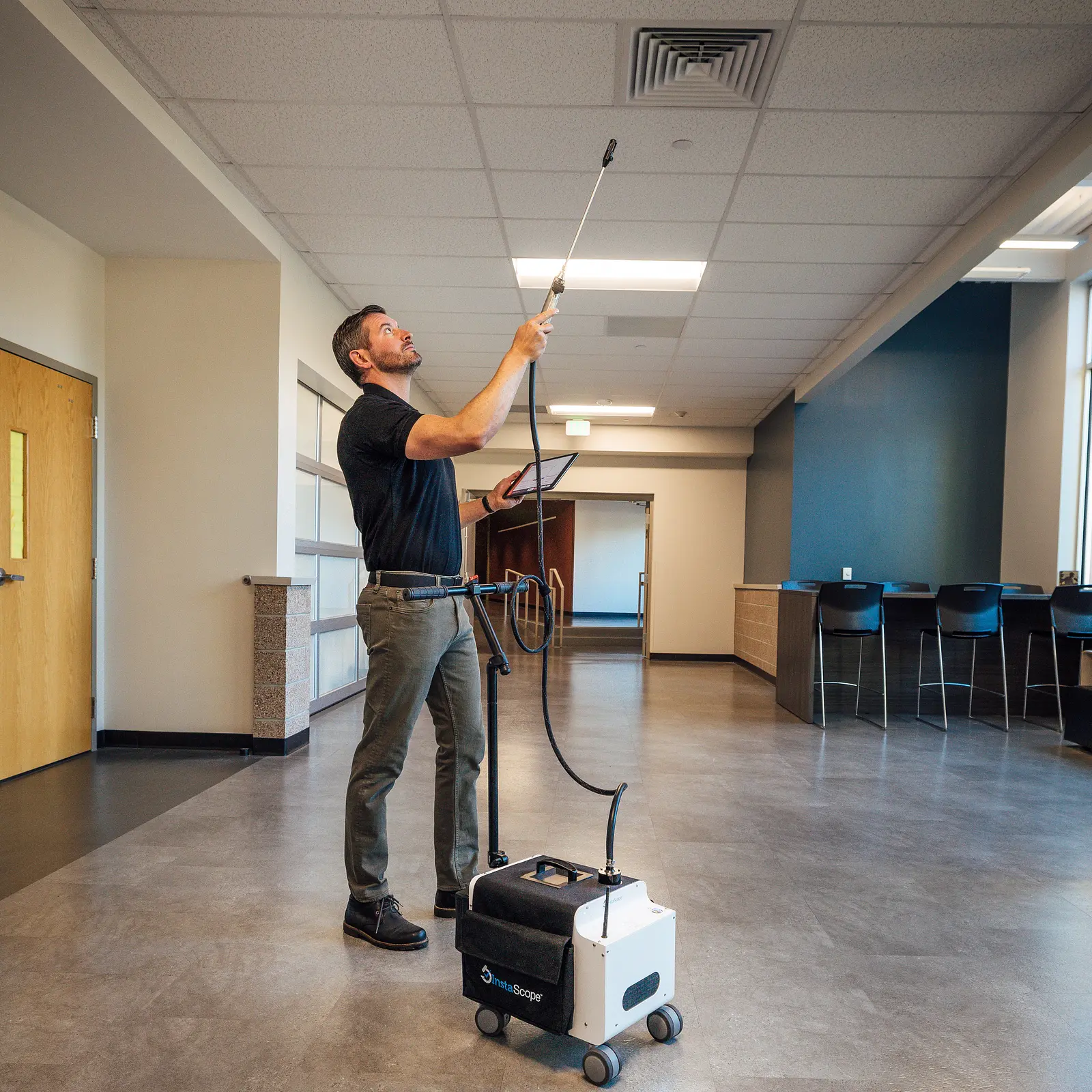
Fresno Pure Maintenance lists visual assessment, infrared imaging and moisture meters among its mold testing and inspection methods. Ask the inspector to explain what each finding means. A temperature difference on a thermal image is a clue to investigate, rather than proof of mold by itself.
Access matters. An inspection from the finished room may not show the condition of every hidden material. A useful explanation separates what was observed from what remains uncertain and identifies any further access or specialist work needed.
Do You Need Air Samples After Every Leak?
No. The EPA explains that sampling is often unnecessary when mold growth is already visible. The priority is addressing the growth and the water problem. If samples are recommended, ask what question they will answer and how the result could change the next step.
For a leak with no visible growth but an unexplained odor or uncertain extent, an inspector may recommend a more focused investigation. Sampling should support that investigation, not substitute for checking damp building materials.
Check Whether the Materials Have Dried
The EPA recommends acting promptly to dry wet materials, generally within 24 to 48 hours, to help prevent mold growth. That is a prevention goal, not a guarantee that growth starts at a particular hour or that a wall is dry after two days.
Tell the inspector when the leak was discovered and when drying began. The repair plan should account for the materials involved and the actual moisture conditions. A surface can look dry while the condition behind it still needs assessment.
Ask for a Clear Plan Before Repainting
Before closing the repair, ask for answers to these questions: Where was moisture found? Which materials need further drying, cleaning or replacement? Who is fixing the water source? What should be checked before the ceiling is sealed and painted?
If remediation is needed, get its scope in writing. Keep roof repairs, mold-related work and finish repairs clear enough that you know who is responsible for each step. Fresno Pure Maintenance’s mold remediation service addresses moisture-related damage as well as treatment; confirm the specific scope for your home.
Once work is complete, keep the inspection notes and repair records together. They are useful if the same area changes during later rain or a different contractor needs to understand the history.
Frequently Asked Questions
Does a ceiling stain always mean mold?
No. A stain shows that something affected the finish, but appearance alone cannot establish whether mold is present. Its history, current moisture conditions and any accessible affected materials need to be considered.
Should I wait until the roof is fixed to call an inspector?
You can ask about the inspection while arranging the roof repair. Explain whether water is still entering. The timing should support moisture control and assessment rather than delay an urgent repair.
Can I paint over the stain once it feels dry?
Confirm the water source is repaired and the affected materials have been assessed before repainting. The EPA advises against painting over moldy surfaces. Painting does not resolve the moisture problem.
What if the musty smell remains after the leak repair?
Tell the inspector where and when you notice it. A remaining odor is a reason to investigate the affected area and other possible moisture sources, not proof of a particular mold species.
Get a Quote for a Mold Inspection in Fresno or Clovis
If a roof leak has left a lingering odor, repeated staining or questions about damp materials, Fresno Pure Maintenance can help you discuss the inspection scope. Get a quote and share the leak history, repair status and photos of the affected area.